SandVox

Author: hekw

  • Why Is Customer Experience So Important?

    class=”entry-content” id=”pix-entry-content”>

    Let’s face it: nowadays, the gaming industry is dominated by fierce competition, easy or completely free market entry for game developers, and a fairly high dropout rate, the last one becoming a real concern. Therefore, succeeding in this market is not just about creating the best products, but providing the best customer experience. 

    What does it mean?

    Apart from creating a user-friendly interface, implementing the latest trends in the gaming industry, whether we are talking about AR, Ai, or VR, is extremely important. But they are not enough. You also need to know when and how to react when things go wrong – whether it’s a bug, a computer problem, or a less simple interaction with other players. Why? Because if you fail in fixing such situations, it’s very easy for your customers to lose their patience and go to the competition.

    A short overview of the gaming market

    The statistics show that the gaming industry is booming and will continue to grow in the upcoming future. According to a Mordor Intelligence Report, the gaming market was valued at $198.40 billion in 2021, and it’s predicted to hit $339.95 billion by 2027.

    Due to the multiple lockdowns and social distancing measures caused by the COVID-19 pandemic, many people played games to pass the time. As result, the online traffic of the gaming platforms was booming, while video gaming trends experienced a massive surge in players and revenue.

    With $88.2 billion in 2021 alone, the Asia-Pacific region dominates the industry by game turnovers, making up 50.2% of all game revenues and 50% of the global market. Reaching $45.6 billion, China is by far the primary driver here, but also Japan and South Korea show high potential for market growth. Asia-Pacific is followed by North America which comes in second place with $42,6 Bn and 24% of the share market, and Europe, which reached $31,5 Bn last year.

    customer-experience-gaming-market-revenue-2021

    If we take a closer look at the gaming market in terms of audience, you’ll see that there were 3.0 billion players across the globe in 2021 – up +5.3% year on year from 2020 – and it’s forecasted to reach 3.32 Bn by 2024.

    Due to the development of smartphones, mobile is the main sector to see growth, accounting for 45% of the global market and revenues of more than $70 billion US. According to Newzoo, mobile is followed by console gaming as the second-largest digital gaming segment ($49.2 billion in revenue in 2021 and 28% share market), and PC games, with $33.3 billion and 189% share market, in third place.

    According to Limelight Networks’ report on The State of Online Gaming, mobile phones are also the primary gaming devices on a global scale, but preferences vary by country.

    But mobile games are not the only trend that reshapes the industry. With professional video game tournaments being favorite among competitors and consumers, esports, for example, are becoming increasingly popular, especially on platforms like Twitch. In addition, battle royale is one of the game genres that is making its way through this industry.

    In the gaming industry, download speed matters, too. Globally, 87% of gamers consider downloading games a frustrating process, interruption being their top issue. 38% of gamers consider this as their main concern.

    Multiple gaming options

    But gamers have a vast array of gaming possibilities to choose from. Therefore, providing great customer service is essential to increasing customer retention and satisfaction. With mobile and online sectors helping games to become more accessible than ever to a wider audience, you can assume that anyone is or can become a player.   

    Gamers are everywhere

    Gamers are everywhere, so customer support should also be everywhere. Phone, email, and in-person support are no longer enough. In addition, customer support needs to be knowledgeable, personalized, multilingual, and available 24/7.

    What does all this mean?

    First, there are plenty of gamers out there, and they are playing a lot of different games. Second, the label “gamer” doesn’t include only the total devotees who spend countless hours in front of their computers or consoles. Thanks to smartphones, we may say that all of us are gamers now, in one way or another. In other words, the gaming community has grown and become more diverse, while their demands and needs are more complex. Therefore, the gaming publishers, and especially their support teams, need to be efficient, professional, and prepared to provide a great customer experience to their gamers.

    What do gamers look like these days?

    customer-experience-gamer-profile

    Players no longer fall into a predictable category: as mentioned before, thanks to mobile gaming, everyone can be a player nowadays. Inevitably, this means that the customer support teams must respond to queries coming both from professional gamers, but also from people who may not even know the basics of gaming. And once they’ve bought the product, players can use it anytime and anywhere in the world. Therefore, you cannot predict where and when during the day will come the biggest influx of queries.

    Players expect a very short response time: when a game crashes, it destroys their customer experience. At the same time, gamers expect the problem to be solved as soon as possible, so they can continue their playing.

    They are active in forums and online gaming communities, that many times are also support centers: gamers are usually very active in online communities and forums, sharing opinions and tips about their favorite games. Most often, they also tend to reach other gamers to see if anyone has experienced the same issue as theirs and how can find a solution. In many cases, if they contact your support team means they didn’t solve their issue, and probably, they are angry!

    custo er-experience-components

    Players don’t see the game just as a product: nowadays, gaming is about having a whole experience and, for many of them, a source of identity and community.

    Gamers are willing to pay for playing, even if they can get them for free: this means they expect great customer service in exchange for their money.

    They have multiple options to choose from: players can access games in many ways and across multiple platforms, so when they have a bad customer experience, they can move on to the next game immediately. Ryan Racioppo (creator of the Roshpit Champions game) says, “If they’re not having fun, they can quit. If their friends don’t play, they’ll quit. If they get angry, they’ll quit. The bottom line is that your customers have so much choice, they can jump ship at any time.” So when gaining a new player, don’t take his loyalty for granted.

    As the industry continues to grow, the competition becomes fiercer, and the development of a game involves more resources. That’s why it’s so important for publishers to provide a world-class customer experience. This means not just keeping the existing customers, but also getting new ones. But when you fail, you’ll end up getting bad reviews, losing customers, and ultimately, having higher user acquisition costs.

    If we haven’t convinced you yet, keep reading to see the main benefits you get when you meet your players’ expectations.

    Why customer experience is more important than ever

    reasons-customer-experience-is-important

    Increased revenues

    Research shows that the average overall customer satisfaction rate is about to 86%, your players’ experience when interacting with your brand being the key to success or failure. That’s why you need to have not only the ability to deliver what you promised but also to surprise your customer with extra care and support.

    Keep in your mind that a totally satisfied customer generates up to 2.6x more revenue than a somewhat satisfied customer and 14x more revenue than a somewhat dissatisfied customer.

    Your main goal is to create a consistent experience across all touchpoints and to exceed your own standards and those of your customers. By keeping an eye on your entire customer journey, you make sure that the promise of a positive experience is kept and that you provide superior service.

    New gamers with a great customer experience are more likely to turn into loyal players

    Creating a great customer experience is a valuable asset and really impresses the players, making sure that they will continue to play your game in the future.

    Buying a new customer costs 7 times more than maintaining an existing one. Therefore, investing in your existing customers will pay off and it’s only a matter of time before you see positive results.

    But what happens if your customer is unhappy?

    There are a few things that influence your brand reputation more than how you respond to complaints. Customer service is an important part of developing brand loyalty, and how you respond to dissatisfied consumers will determine what they say about you afterwards.

    There are several ways to handle negative reviews, but the basic rule is to respond politely and make sure you do your best to resolve their issue. Make your customer feel heard and cared for and you will find that they will pay in the long run.

    In fact, did you know that 95% of people who have had a bad experience are willing to give the brand a second try if they know that their problem has been solved correctly?

    3.    A community of game advocates is a powerful tool

    why customer-experience-is-important-reasons

    Also in the gaming industry, word of mouth is still one of the most powerful communication tools can wish for today. As 84% of consumers don’t trust ads anymore, people are seeking third-party validation when making an online purchase.

    Here customer advocacy comes in and that’s why is so important.

    By focusing on creating amazing customer experiences and embodying the desire for your business to go above and beyond, you’re creating an advocate out of every gameplayer. And then you can use them, as well as user-generated content to engage new players, reinforce brand loyalty and recommend the game to other potential consumers.

    4.    Standing out is no longer an issue but customer experience can be

    customer-experience-stand-out-from-competitiom

    When everyone is publishing great games, it’s getting harder and harder to stand out from the crowd. But having a competitive advantage is huge, and customer experience is the perfect tool to help you differentiate yourself from the competition.

    As Jerry Gregoire, CIO at Dell, says, “The customer experience is the next competitive battleground.” This way, players will no longer compare only games and prices, but also the additional services you offer and user experience.

    With 88% of potential clients reading reviews to determine the quality of a business’s customer experience, consumer feedback has become an invaluable tool. Therefore, implementing a player-centric strategy, and standing out from your competitors is the sure way to make sure today’s customers become tomorrow’s game advocates.

    5. Trusted relationships are so important in uncertain times

    According to Statista, 763.51 million users applied ad blockers in 2019. This doesn’t necessarily mean people hate ads, but they want to filter which ads to see. However, we have to mention that people don’t trust advertisements so much as in the past.

    And then, how can you build a strong relationship with your customer? The right answer is: use personalized content and experiences. Making every player feel special and unique will send a positive message: they are cared for and important to your business.

    By doing so, you have a better chance of building trust with them, and therefore creating a strong, long-lasting relationship.

    User experience: final words

    There is no doubt that the feelings experienced by your players about your game and your brand are the key to success. Identifying key points of contact during your customers’ journey, gathering players’ feedback to improve or keep repeating those experiences, and analyzing trends will help you improve your customer experience and have friends and family tell you about the product you created.

  • How Much Do Translation Agencies Charge?

    How Much Do Translation Agencies Charge?

    What are the benefits of working with a translation agency?

    Find those answers and more in our FAQ.

    How Much Do Translation Agencies Charge?

    There are many aspects to consider when planning your game translation strategy, such as the type of service you need, what language you would like to translate it into, among others. ProZ offers a comprehensive price list which, however, doesn’t reflect current market conditions. Also note that these are only translation rates, while localization or transcreation rates highly differ. Browse through our Translation Costs Calculator and contact us with your request. Depending on your game, we can give you a discount of up to 30%.


    How Much Do Translation Agencies Charge


    I’m not sure what language to localize my game into. Do you offer consulting services?

    We certainly do! We’re mobile gaming industry experts with several years of experience. That being said, we can give you access to our data-driven reports and additionally offer your in-person consultation to provide you with the best languages to translate your video game into. Schedule a call with us to get started

    Translation Consulation 

    I requested a free translation review audit. How long does it take until I hear from you?

     We usually get back to you within 48-72 hours, depending on the nature of the audit.

    Translation Review 

    I have an urgent translation. When can I expect it translated and do you charge any additional fee?

    We want to help you achieve your goals and to grow with you. For urgent translation services, we won’t charge any hidden fees and will accommodate our efforts to deliver your localization within 24-48 hours, depending on the size of the project. You are welcome to check our urgent translation rates here

    Urgent Translation

    What are the advantages of working with a translation agency?

    With freelance marketplaces, like UpWork, Fiver, or ProZ, most companies wonder why translation agencies even exist and what their actual benefits are. The truth is, though, that those marketplaces created a run to the bottom, pushing translation rates down and, concurrently, the quality. It creates a challenging task for you as a client to find the right translator who is: 

    – reliable
    – qualified and specialized in game translation
    – available
    – who can handle the actual workload

    Additionally, you need to make sure he or she actually delivers high-quality work. Due to the aforementioned run to the bottom, most translators omit detailed proofreading procedures or don’t offer localization quality assurance – a crucial step to verify if the translation is contextually valid in-game. 

    Hiring an independent proofreader (not a localization quality assurance tester) appears to be the most reasonable solution. However, due to the fierce competition across the translation industry or simply due to the low quality of the actual translation, typically, proofreaders will provide you with a devastating verdict offering you to rework the entire translation work.

    And back to step one – just for one language. 

    Too Hands-Off

    There are also those translators or even companies that localize your game – and then disappear once the task is done. Those translators that aren’t concerned about confirming their work actually worked, monitoring your progress, or giving you any sort of long-term support, creating uncertainty and quality fluctuations. Those companies that can’t be partners because they won’t stick around after the job’s done. They’re those translators that can’t be held accountable for poor (or no) results, and those companies that are only interested in getting paid – fast. Once you point out issues, they simply disappear, and you will never hear from them again. 

    Too Unqualified

    And then some translators promise they can get you the comprehensive, in-depth localization you need. But only in their local region. That leaves you hustling to find local localization services in every other region you’re trying to expand into – and we don’t need to tell you how extraordinarily time-consuming, costly, and frustrating that is.

    Too Simple

    By the way, most companies you see offering localization? They’re really offering translation. Quick, easy – and ineffective. Translation doesn’t account for the nuances in language. It doesn’t solve the problem of translating common proverbs and slang in a way that makes sense, and it doesn’t signify to the players that your game was made for them. They also don’t offer you in-depth quality assurance through proofreaders and localization quality assurance testers or aren’t able to keep up with your plans to scale up.

    Too Expensive

    And then there are the companies that promise to avoid all of those traps – that guarantee you the top-notch, scalable, and reliable localization services that you need – for a price. A hefty one. An unreasonable one. These companies capitalize on their unique skill-set. If they really do have what it takes to provide impeccable worldwide localization, then they’ll only take offers from the highest bidders. The big names, who can afford the daunting asking price. 

    We might convinced you that it’s a good idea to reconsider teaming up with individual translators or to be a tad more skeptical towards translation agencies, right? What makes us, SandVox, so special, then, you might ask? 

    Efficiency First

    Armed with an international team of localization experts and tried-and-true processes for achieving the best possible results, our services are reliable, effective, and fast. Our team members are located around the world (in their native regions), so we’re able to work around the clock, taking advantage of time zone differences to get you your completed tasks quicker. But heightened productivity never means the quality of work is threatened; with rigorous quality control checks, our Localization QA Experts confirm that industry standards are met – and surpassed. At SandVox, we know that time is money. That’s why we’re committed to getting you top-tier results faster – so you can see your profitability soar.

    Ready For Anything

    In the context of the current geopolitical turmoil (including the “decoupling” between the US and China), it’s natural to think about all the possible risks when considering international expansion. At SandVox, we do our best to minimize those risks – setting your game up for stress-free success on the global level. We’ve prioritized risk prevention by establishing a global network of personnel, including headquarters in the US and Hong Kong so that your growth plans can’t be negatively affected by geopolitics. With communications occurring via best-practice tools (like DingTalk, WeChat, & Slack) and all major currencies accepted as payment, we are ready for any expansion project, anywhere in the world.

    Always Scalable

    Whether you’re seeking a partner to help you grow from 0-to-1 or from 0-to-1-million, SandVox is here for you. Our localization services are tailored around your needs, which means that as your expansion plans to scale, so too can our services. Our diverse, large, and expertly equipped team is ready to jump to action whenever you need them. All you have to do is say the word. And then there are the details outside of localization: in addition to our primary service, we also offer scalable capabilities in Customer Service, Community Management, Games Marketing, AI Data Analysis, and Project Management. Whatever you need, SandVox is prepared to make it happen.

    The bottom line is, SandVox does things differently.

    How Do I Get Started?

    w

    Free 30 Min Chat

    Tell us about your mobile game and what your goals are. Just hit the Chat button on the bottom right and get started!

    Book Appointment

    Ready for the next step? Book a free consultation session with our experts and let’s get to work. 

    Kickoff

    All’s set for your game’s success! Just sit back and relax while we get the job done. 

    Send us a message

    Have a general question? Ready to book your appointment? We’re just an email away.

    Skype: sandvox

    1810 E Sahara Ave 212 1164, Las Vegas, NV 89104, USA

    hello@sandvox.io

  • 20 Low-Budget Creative Ways to Market Your Mobile Indie Game (part II)

    class=”entry-content” id=”pix-entry-content”>

    Submit your mobile indie game to multiple stores to increase visibility

    Targeting multiple platforms is one of the best options for your mobile indie game to maximize its visibility. Of course, on top of the lists are Android and iOS platforms, and this is for a good reason.

    With over 2.8 billion active users in 2020 spanning over 190 countries, Android is the most popular operating system in the world, followed by iOS, with 1 billion active users. Optimizing your playing just for those two platforms allows you to reach over 95% of the smartphone users

    However, be aware that there are some differences between the markets dominated by each operating system. If Android is the market leader in countries like Mexico, Australia, Japan, China, Brazil, Italy, Spain, France, Germany, UK, India, Indonesia, Turkey, and Vietnam with over 70% market share, iOs is favorited in the US, Canada, and other English speaking countries.

    Given the technologies available on the market, it won’t be very complicated to build a cross-platform game. However, if you developed your game for Android, you should also consider submitting it to other multiple stores.

    Most of these alternatives try to stand out from the competition and come with their own features and benefits, generating a steady growth of customers. Some of them are even targeted to a specific country and location that is not covered by the Play Store or simply preferred over the Google App Store.

    Some of the most popular Android app markets are:

    Create a great presentation

    mobile-indie-game-great-presentation

    When buying a product, which are the first things you are looking at? That’s right, the pictures showing that product. Of course, you also read the product description, its features, and the benefits you get from using it, but the presentation images are the ones that draw you the first time. Without any high-quality images, that product will not get your attention or you will quickly lose interest in it. And this is because people perceive 90% of information with their eyes, while 40% of people respond better to images than text.

    The same philosophy applies also to any mobile indie game, regardless of the marketplace you decide to publish it – from Twitch to Discord, Steam, iOS, or Android app stores.

    Therefore, the visuals you create for your playing are extremely important. They provide your audience not just with the information about your gameplay graphics, but also about the user interface, characters, progression system, emotions they will experience, and much more.

    According to Statista, screenshots are responsible for 75% of game listings in search results. In addition, Split Metrics states that enhanced screenshots can improve your game’s downloads by over 30%. When a user gets on your product page, screenshots tend to catch the best part of attention due to their visual nature and the large part of the page space.

    There are many users whose perception of an app is primarily based on the quality of its screenshots and game reviews. So, use this opportunity to attract your players’ attention, and convince them to play or download your game. When localizing your game, don’t forget to adapt your screenshots for the specific regions you target.  

    Get featured on game reviews

    mobile-indie-game-reviews

    And speaking about reviews: this is another great option to promote your product for free and increase your downloads and sales.

    Getting your game featured on a top-ranking review site, will ultimately increase traffic for new users. For this, you have to pitch your story to the editor or to the content writer who is responsible for games’ reviews.

    However, before submitting your game to the website, make sure you tick all the following:

    • Be sure it’s free from any bugs and glitches and fully optimized. This way you’ll avoid having a bad review for your game, that would instantly kill all hopes of success in the app store. 
    • Provide the description and high-resolution screenshots
    • If possible, allow them to play your game for free.

    Here is a list of some of the top  journalism sites or games where you can feature your product:

    Destructoid

    market-mobile-indie-game-destructoid

    A great all-around gaming site, Destructoid publishes articles regularly, with plenty of reviews, news posts, and weekly features. You can include here previews of upcoming games, updates on certain games, and more.

    GamesRadar+

    market-mobile-indie-game-gamesradar

    GamesRadar+ provides news, reviews, features, hands-on looks at new games, and more. In the reviews, clear Pros/Cons lists and a summary of the verdict make them easy to skim.

    Game Informer

    market-mobile-indie-game-gameinformer

    Game Informer is a video game magazine that is all about games. You’ll find here previews of upcoming games, news, reviews, and features. Their team includes longtime game players, and therefore, the reviews break down the most important points, like GraphicsPlayability, and Replay.

    GameSpot

    GameSpot is a well-known gaming site where you’ll find popular and recent news on its homepage, along with tabs to filter by your favorite game systems.

    Let Bloggers Review Your Mobile Indie Game

    indie-mobile-game-blogger-review

    Basically, this is very similar to connecting with influencers to promote your mobile indie game on social media. But if influencer marketing targets the mass audience, here you focus on blogs that generate content within your specific industry.

    Many people find new games through Google searches. So, getting your game featured in one or more of the top 10-15 blogs specific to your niche and industry increases your chances to receive a lot of free and organic traffic. You have many options to help bloggers review your game more easily, coupons and promotional in-game currency being just some of them. In addition, you can also try to pay for backlinks mentioning your product in their blog, and feature these links on your own blog/game landing page.

    Create an email signature that links to your indie mobile game

    market-mobile-indie-game-email-signature

    Using a personalized email signature is one of the best marketing techniques to boost your mobile indie game downloads for free. All you have to do is to include in the email signature a link to your landing page or your website. Why?

    Because email marketing still matters and here are some data that proves this:

    • over 4 billion People use email — and that number is growing, expecting to hit 4.5 billion in 2023
    • two-thirds of subscribers like to receive branded emails at least once a week.
    • 88% of respondents said they look more favorably on emails that feel personally written for them
    •  91% of people check their mail daily.

    So, when working to improve your game downloads and sales, building your email list is one of the best marketing strategies you can consider. Think like this: if you have 4 people in the team sending 25 emails per day, that is 500 potential players you’re reaching every week or over 2000 per month. Even if half of these people click on your email signature, you can consider them potential visitors to your game download page.

    Integrate community features

    Empowering your players with ways to socialize and express themselves is the foolproof way of creating a truly engaging experience for them. This way you make them feel that they matter to you, and as result, they will be more likely to play / download / buy your game.

    This is one of the best practices implemented by the most popular games that have some built-in community features such as friend lists, in-game messaging, screenshot capture and sharing, mod support, etc. Why not get inspired by them?

    You can let your users customize their profiles, and give them the possibility to share tips or guides with newbies. For doing this, you might set up a community forum and links to Discord servers/ subreddits and include them on the website of your game.

    Interact with your users

    market-mobile-indie-game-user-interaction

    You should understand that your users are not just “some players”. They are valuable potential customers who, for various reasons, chose your mobile indie game from the several thousand other options they might have on the market.

    Therefore, when they ask a question or post a review, you should answer them as soon as possible, showing them that you care about what they say. Building a relationship based on mutual trust and respect will not just make them engage more with your game, but you’ll also get new customers since your current players will eventually become advocates for your gameplay and will recommend it to their friends.

    Stick to the point in your press release and get free publicity from the media

    Press releases are one of the best methods of getting advertisements for free. But before reaching out to the gaming journalists and editors, make sure you compile a list of all the information they need, including the high-resolution screenshots and the demo video. Include a description of your game and target audience, the game’s story, its value proposition, features, and the reasons for which it stands out from the competition.

    The reason is simple: people like stories and when you have a compelling one, the media is more likely to give it a priority in their coverage. Content writers are always looking for new stories, and if you believe in your product, be prepared to see your game featured on review sites or tech portals.

    Join Facebook groups

    mobile-indie-game-FB-groups

    Creating a social media page for your game and interacting with potential users is not enough. To boost your social media presence as a game developer, you should also join different Facebook groups from the same niche and with the same interests. This way you don’t gain just promotion for your game, but also build networks with entrepreneurs and like-minded developers, and there are big chances to get some great advice on game development. 

    But be aware that most groups have strict rules against self-promotion. So don’t start to obsessively advertise your game. Instead, look for developer communities and start building relationships with other game devs, who might agree to a cross-promotion deal.

    Final words about marketing your mobile indie game

    Of course, there are many other marketing strategies that you can use to promote your game as it deserves. For some of them, you will need no money, while others are low-budget. Some of them will have fast results, while others will need more time. But if you are focused and put enough effort into the promotion strategies we have shared, you will be successful in the long run.

    Also, remember that even if your marketing strategies help you raise awareness of your game, they certainly won’t beat a well-built game. So focus on developing and localizing a fun, creative, and engaging mobile indie game that players will love, and the rest is just details.

  • Multilingual SEO: How To Expand On The International Markets

    class=”entry-content” id=”pix-entry-content”>

    Do you want to target a foreign audience and expand into international markets? Translating and localizing your game is vital, but not enough. You need to develop and implement effective marketing strategies, with multilingual SEO being one of the best ways to ensure that you are found organically by your international target audience.

    We have often been asked: what should I do in terms of SEO when I target both a local and a foreign audience? Well, there are a few things to consider.

    First, you need a multilingual website. Second, you’ll want to make sure people in different countries see the right pages for their specific locations, and also avoid penalties for duplicate content. Fortunately, Google has come up with several measures you can take to improve your ranking.

    What actionable steps can you take to beat the search algorithms and drive more organic traffic to your multilingual site? Let’s see!

    What is multilingual SEO and when should you use it?

    By definition, multilingual SEO means optimizing your website content for different languages, so it can become searchable in new markets and people speaking different languages can find it through organic search.

    Simple and complicated at the same time, right? Let’s break it through and analyze this information. Let’s break it through and analyze this information.

    According to Statista, most internet users use American English as their search language. But statistically speaking, English is just the third most spoken language in the world.

    multilingual SEO - most spoken languages

    And even if your main audience is living in English-speaking countries, you’ll find that not all of your visitors are native English speakers. So, it’s worth using multilingual search engine optimization to reach as wide an audience as possible.

    Therefore, it might be tempting to rely on Google translate, which non-English speakers can use to translate both the results of a Google search and the contents of your site. But this is only in theory. But the truth is that if you use a dedicated multilingual SEO strategy, you will get much better results, both for SEO and for the quality of the translated content.

    Why is multilingual SEO so important?

    When expanding into an international market, you need to know that this process requires coherent and consistent marketing strategies, in which SEO and localization play a key role.

    This means that all the SEO rules used for the local market extend to the international one. In addition, you add the localization efforts. To make your content both accessible and searchable, and have a unique presence that resonates with your new audience, translations need to be fine-tuned to everything, from cultural and religious norms to the different nuances of the language.

    Therefore, you need to start with proper and in-depth research, by answering questions such as:

    • who is your new target audience?
    • what do they look like (demographic and geographic characteristics, habits, education)?
    • what do they search for?
    • what do they want to know more about?
    • how did they respond to your competition’s efforts to reach and engage with them?

    Based on the results, you can tailor your content to meet users’ needs and meet them where they already are. After all, you’ll want to make it easier for your new potential customers to find your content in their native language.

    Multilingual SEO best practices

    To optimize your translated website for SEO, consider these tips:

    Translate and localize your keywords

    multilingual SEO - localize keywords

    When it comes to multilingual SEO, it is not enough to simply translate the current keywords of your site. Instead, it’s vital to find out what words your target audience tends to use when searching and include them in the translated content.

    And that’s because your foreign audience can search for content using terminology different from that resulting from a simple translation. To be listed in search engines, you will want to respond accordingly to these queries.

    When thinking about your translated site, you need to identify the keywords that resonate in each of your target locales. That’s why is vital to work with a localization team native to the target market. Once you have a solid list of keywords, include them both in your website content and metadata – site description, meta tags, and ALT tags.

    Content localization matters for your multilingual SEO

    multilingual SEO - content

    Content is essential for your SEO strategy. If you want to publish content in different languages on your website, you’ll need to adapt the existing one or create a new copy. However, adapting your content while maintaining efficient SEO can be a challenge.

    Because the same words have different meanings in languages used in different countries, just translating your keywords using Google Translate or other AI translation tools is not enough. You have to get into the head of your audience, know which words they are using, and understand their search intent.

    Also, when translating content for a foreign audience, you need to take into account the cultural differences that exist between countries. Otherwise, your audience will realize that the text was not written specifically for them and will not engage with it. Therefore, you should work with native speakers who can localize or at least check your translated content. Thus, you avoid making awkward mistakes and offending potential foreign clients.

    Use dedicated URLs

    Duplicate content is one of the main problems when having multilingual websites. While not all duplicate content is harmful, text that appears in multiple URLs can lead to penalties, such as lower ranking or even de-indexing in search engines.

    To avoid this, Google recommends using “dedicated URLs” that include a language indicator. This enables both users and search engines to identify the language from the URL itself. For example, while your original page might be www.example.com, the Italian version could be www.example.com/it/, the German version will be www.example.com/de, and so on.

    Depending on the structure of your URL, you will have a different placement of the language indicator in the URL, especially when it comes to the difference between using country code top-level domains (CCTLD) and subdomains on your own site. You have three options:

    • Top-level domain (e.g. www.example.fr)
    • Subdomain (e.g. www.fr.example.com)
    • Subdirectory (e.g. www.example.com/fr/)

    However, also a language indicator can be misinterpreted – so to make sure your website is SEO optimized you need to define your URL parameters.

    Apply “hreflang” attributes to avoid duplicated content penalties

    multilingual SEO - hreflang

    When implementing multilingual SEO, you will probably hear about hreflang tag. But what is it? And why is it important?

    In plain English, this is a tag or an attribute that was created by Google to tell its algorithm that “this page is translated to a specific language” and should be prioritized. This is more effective not for country differentiation but for regionalization.

    Let’s say, for example, that you have separate sites for the US and Australia and even if the content is very similar, the pages are tagged with the appropriate language attribute. Because Google recognizes you have optimized pages for users in different languages and regions instead of duplicated content on your site, you’ll avoid the penalties and end in boosting your website’s rankings on country-specific search engines.

    Hreflang tag used in combination with other international SEO strategies allows Google to guide your potential customers to the right version of your website.

    Translate your metadata

    When you develop a multilingual website, you’ll also need to ensure that you translate not just the texts, but also the metadata (meta description and ATL tags). They are crucial on-page SEO elements that will help you boost your ranking for the new countries you’re targeting.

    But due to the differences between languages, this is not always just a simple word-for-word translation. Therefore, before publishing the translated version of your original content, you need to conduct new keyword research specifically for your new target markets. Every single time.

    You can easily do this by using SEO tools like Ubersuggest, Ahrefs , or Semrush, to name just a few. You can do this by using their keyword explorers and following a few simple steps:

    • Enter a translated keyword
    •  selecting the country you want to target
    • review the results to give you a better idea of what your potential customers might search.
    multilingual SEO - Ubersuggest DE
    multilingual SEO - Ubersuggest EN

    Keep one language per page

    You might be tempted to translate just some parts of your website and keep others in the original language. Some examples of these situations could occur when:

    • the main content is translated but the navigation menu is in the original language
    • user-generated content (such as comments or forum discussions) is in different languages.

    In both cases, you can clarify the intended language and region of the page by adding hreflang tag.

    However, having multiple languages on the same page could alter your users’ experience, especially when they don’t understand the original vocabulary of your website. In the first case, even if the reader might understand the main content, he will have difficulties when trying to navigate to other pages. In the second case, user-generated content in different languages could result in confused or even frustrated users, as they lose the context of the discussions.

    Therefore, you have to make sure that your stick to the same language on a page, and using an AI machine translation tool can be helpful.

    Make sure your website is loading fast

    multilingual-SEO-page-speed

    Starting with July 2018, your website loading time has become a key ranking factor for SEO, so it’s important to have a fast page not just to provide a great experience to your users, but also to rank higher in SERPs. 

    In other words, the speed of your website will directly influence the amount of traffic your website gets. There are a few easy steps to implement to make a significant difference in the loading time. These include:

    • installing a plugin that enables page caching 
    • setting up browser caching
    • integrating a CDN with your website
    • optimize the size of your images.

    Most of these methods are somewhat technical, but if you’re using WordPress to build your site, you have access to many plugins that will help you increase your site speed. Plugins such as WP Rocket, fix most problems identified by Google’s PageSpeed Insights.

    Final words

    When creating a website in multiple languages, it’s vital to ensure the quality of your translation. And yes, as mentioned many times (and we can’t stress enough with this), having a localized website is a matter of quality content on all your pages.

    But you also need to consider several multilingual SEO factors, that will help you to define a clear intended reader for each of your pages and avoid duplicated content. This way, you will not just boost your website rankings but also improve the overall user experience.

  • Spanish vs. Portuguese: Why You Need To Localize In The Right Language

    class=”entry-content” id=”pix-entry-content”>

    When localizing for the European market (Spain and Portugal) or for Latin America (Brazil and Mexico), you might think that due to the similarities between Spanish and Portuguese, both languages are the same, and it would be enough to translate and localize your game in just one of them. The truth, however, is that when speaking about Spanish vs. Portuguese, this is not quite possible. But it’s also not that black and white.

    You should know that yes, there is a wide number of similarities between them, many enough to make people from those two countries understand some of the other. Still, a Spanish-speaking person is far away from being fluent in Portuguese, and vice versa, if they don’t study the language.

    Therefore, when thinking to target the Spanish market and the Portuguese market, you must know that you have to translate and localize your game for each of them. This is the best solution for providing a great experience to players, gaining their hearts, and making them engage with your game. After all, those are two different countries with two different languages.

    How it all started     

    One of the main questions we’ve heard many times was “If Spanish and Portuguese are two different languages, why are they so similar?” 

    Well, this is because, from the historic and linguistic points of view, they have the same origin. Together with other languages, such as French, Italian, Catalan, Spanish, and Portuguese derived from “Vulgar Latin”. More specifically, these languages fall in the category of the Ibero-Romance languages. This means that they developed in the geographic region of the Iberian Peninsula.

    Spanish vs. Portuguese - Iberian peninsula

    To understand this, we need to make a short overview and start by going back to ancient times. “Vulgar Latin” is the nonstandard form of the Latin language spoken by soldiers and merchants throughout the Roman Empire

    The original Latin speakers were the people responsible for bringing the peninsula to Rome. Then, they dominated the region for almost 600 years. 

    But not just the Roman Empire is responsible for the similarities between Portuguese and Spanish. And geographically, Spain and Portugal are near each other and, in a way, kind of isolated from the rest of Europe. Therefore, it’s no wonder how these two languages developed so much alike even after Rome’s domination.

    Spanish was mostly influenced by the Arab conquest of the island in the 8th century. After this, started a process called by historian “Reconquista”. For centuries after that, the Spaniards and the Portuguese tried to eliminate the Arab domination and finally succeeded in 1492. The Portuguese language suffered less from this influence, so you’ll find fewer Arabian words there, but it was more influenced by French and Catalan. Nowadays, both languages are widely spoken and have multiple variants and dialects. With 534 million speakers (460 million native and 74 million non-native speakers) worldwide, Spanish is the 4th spoken language across the globe, while Portuguese ranks the #9, with 234 million speakers (221 native and 13 non-native speakers).

    Therefore, localizing your mobile or video game in those two languages opens the doors to a large market.

    But how different are Spanish and Portuguese? And which are their similarities? Let’s see.

    Spanish and Portuguese similarities

    When talking from the lexical point of view, Spanish and Portuguese have around 90% of similarities. That means that 9 out of 10 words are similar and have a cognate in the other language (words that look and sound similar in both languages because of a common origin).

    Now, let’s take a look at this list of common, everyday words:

    Spanish vs. Portuguese - similar words

    Except for some minor changes in accents, you can’t deny there is a strong resemblance. Also, in terms of grammar, the conjugation system follows the same logic and declinations.

    Spanish vs Portuguese: what are the differences?

    Despite the close relationship between those two languages, there are important Spanish and Portuguese differences, too.

    Pronunciation

    The most notable differences in Spanish vs. Portuguese are in pronunciation and syntax. Therefore, the spoken forms of two similar languages differ more than the written ones and are less intelligible to each other.

    You’ll not find in Spanish the Portuguese letters “ã” and “ç”. And unlike Spanish, Portuguese doesn’t have “ñ”, the Portuguese equivalent being “nh.” Like, for example, señora/Senhora.

    Some words beginning with “f in Portuguese will begin with “h in Spanish, while “z in the middle of a word in Portuguese will be represented with a “c in Spanish. Here are a couple of examples:

    Sometimes, a word in Portuguese that ends in -ão will end in -ón in Spanish. Here are some examples:

    Unlike Spanish, where the words are more deliberate, Portuguese is a very fluid language with a lot of slurred sounds. You’ll find also differences in terms of vowels: Portuguese has 9 vowel sounds, while Spanish has just 5 and you’ll not find the vowels with a nasal sound.

    You also have to know that compared to Spanish, Portuguese includes many extra sounds and has much more complex phonology. This is the one reason for which Portuguese speakers have an easier understanding of spoken Spanish than vice versa.

    False Friends as the difference of Spanish vs. Portuguese

    Even if Spanish and Portuguese share a lot of cognates (words from different languages that look and sound similar and even share the same meaning), they also share a lot of false cognates or “false friends” (words that look and sound the same but have different meanings). Sometimes, using a false cognate is just funny, while at other times it can turn an innocent sentence into an offensive one.

    Spanish vs. Protuguese - false friends

    …. and the list can go on.

    Interrogative Pronouns

    In Portuguese, interrogative pronouns do not have accent marks. In Spanish, they do (quién, por qué, qué, cuándo, cuál). 

    ¿Quién es ese hombre? (Spanish)
    Quem é esse homem? (Portuguese)
    Who is that man? 

    As you can see, unlike in Spanish, there’s no question mark at the beginning of the question in Portuguese. They are omitted, as are initial exclamation marks.

    Grammar

    In addition to lexical differences, Spanish and Portuguese grammar, although similar, have many differences. Thus, it cannot be said that the speakers of one of the two languages (no matter what it is) can easily speak the other.

    Gender

    The Spanish language has three forms for singular definite articles:

    1. Masculine el
    2. Feminine la
    3. Neutral lo

    And it also has three corresponding third-person pronouns:

    1. Él (he)
    2. Ella (she)
    3. Ello (it)

    Portuguese has only two forms in both cases.

    Definite articles:

    1. Masculine o
    2. Feminine a

    Third-person pronouns:

    • Masculine: ele
    1. Feminine: ela

    Some words that are masculine in Spanish are feminine in Portuguese and vice versa:

    Spanish vs. Portuguese - pronouns

    Besides, there are also differences given by the area in which the language is spoken. Brazilian Portuguese is different from European Portuguese and Latin American Spanish is different from European Spanish. And as we already mentioned, behind that there are entire centuries of rich history and different influences.

    Here are four additional major differences between the two languages you should not overlook:

    • In Spain, the alphabet has 28 letters, while the Portuguese alphabet has only 23;
    • while Spanish uses both “yo” and “me” to express the first person singular “I“, in Portuguese only “eu” is used;
    • while in Spanish you have to use muy before adverbs and adjectives and mucho before a noun or after a verb, in Portuguese you just use muito;
    • while Portuguese speakers tend to use a casa dela to express possession, the Spanish speakers just say su casa as you probably already know from the well-known expression Mi casa es su casa;

    Regional Differences

    Spain has more distinct regional differences than Portugal. The regional languages are Castilian, Basque, Andaluz, Galician, and Catalan. In Portugal, the language is the same, even if the accents are different between the north and south of the mainland.

     The biggest differences in European Portuguese are those between the islands and the mainland. Furthermore, you might find that it’s easier for Portuguese and Galicians to communicate in their respective languages than it is for a Portuguese to talk with a Spanish person from another region.

    Spanish vs Portuguese: wrap it up

    Similar languages are something common, and not just for Latin. This is also true for the Germanic languages (where a German understands a Dutch, and a Swedish understands a Norwegian) or for the Slavic languages (where a Polish understands a Slovak), etc.

    There is no doubt that Spanish and Portuguese share the same linguistic roots and, although they have had different influences throughout history, they have much in common. Both much of the vocabulary and many of the grammar rules are similar.

    However, when talking about Spanish vs. Portuguese, you must note that there are many differences between the two languages that make them distinct. Therefore, when addressing Spanish and Portuguese audiences, you consider the characteristics and uniqueness of each language and localize your game differently.

  • 20 Creative Ways To Market Your Mobile Game When You Have a Low Budget

    An indie mobile game is not always profitable. Or at least not from the beginning. That’s because it competes with tens of thousands of other games that are released on the market every year and just making a great game is not enough to sell it.

    Potential customers need to know that your playing exists. In the crowded gaming market, your first (and biggest) problem is connecting with people, both to show them that your work is worth their time and attention, and to persuade them to get involved in your mobile game.

    That’s why you need to find innovative and smart ways to market your product. But most low-budget game development teams can’t afford to spend large amounts of money on marketing or PR campaigns. What can you do then? How can you market your game when you have a tight budget?

    Well, we have some good news for you – marketing your game doesn’t have to cost a fortune. Here are 10 easy marketing tips for you, that require no money!

    1. Develop a stunning website
    2. Create a trailer/demo video
    3. Add a blog to your website
    4. Make beautiful screenshots
    5. Connect with gaming influencers
    6. Use the power of social media
    7. Create a landing page to convert visitors into users
    8. Store ranking optimization as part of your promotion strategies
    9. Use cross-promotions
    10. Come up with promotional offers

    Create a simple, yet impacting website

    Creating a website is the very first step in telling your world about your game. But to make a great impression and convince your potential audience to play/buy/or download your game, it must be unique, informative, easy to scan, and include stunning visuals. The best part is that, unlike the description pages of the app stores, you can be as creative as you can with your site, as long as you don’t forget to optimize it for SEO.

    When planning for your website, don’t forget about these elements:

    • Game name and icon
    • Supported platforms (Android, iOS, etc.)
    • Game sales pitch
    • Call-to-action (mailing-list subscription form, download button, and landing page)
    • Promotional video
    • Social proof elements (testimonials, user reviews, awards, etc.)
    • Key features and screenshots
    • Support contact information
    • Social Media links and buttons
    • Press Kit

    Create a trailer/demo video for your mobile game

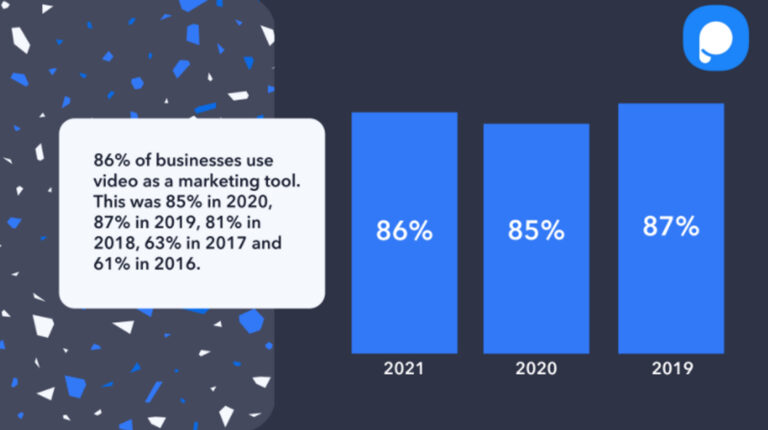
    Video content is the king, and this is not new. In 2021, 86% of businesses used video content as an efficient marketing tool, especially to get attention online.

    market mobile game - stats1
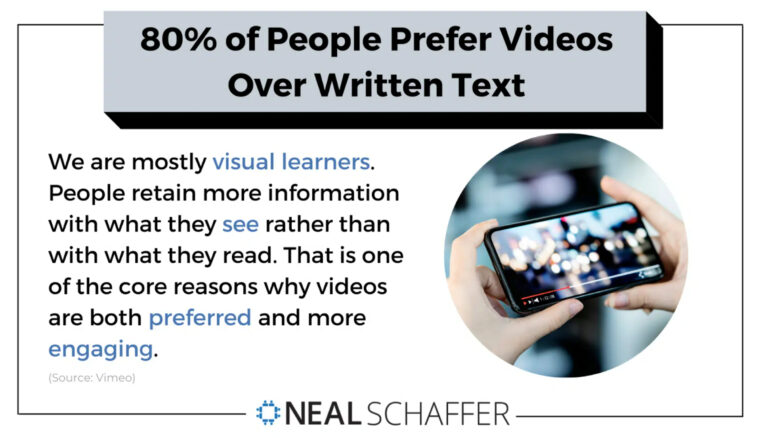
    Why? Let’s see a few statistics that demonstrate the demo video is your best asset to get people’s interest in your work:
    market mobile game - video game stats2
    A trailer is that kind of video content that helps you to creatively promote your game. It combines beautiful images, engaging music, fast-paced animation, and a strong call-to-action (CTA).

    To have a great trailer, you must follow a few rules:

    • keep it short – your demo video should have less than 2 minutes, the ideal length being between 60 to 90 seconds. That’s enough time to show gameplay, to reel people in, but not too much so you don’t lose them before your call-to-action.
    • impress your audience from the very beginning – your target audience needs just 7 seconds to make their opinion. That’s why is important to get your viewers hooked with a powerful intro.
    • have great music and sound effects – when you want to convey different emotions, music is your best ally. So, choose your audio background carefully.
    • use real footage from the game – as we mentioned in this post, people viewing your trailer want to get a real idea of what your game looks like, what the action and key characters are, and how they can play it. Therefore, it’s important not to mislead them and use real gameplay footage in your demo video.
    • include reviews and quotes from professionals – adding testimonials on landing pages or websites is one of the best ways to raise the credibility and authority of your work. If journalists, gaming influencers, or famous developers give a nice comment on your game, include it in your trailer.

    • end your demo movie with a strong CTA – tell your viewer what you want them to do (play/buy/download) after watching the video; also let them know where they can find your game (Apple and Google store, Steam, etc) and where they can find your landing page.

    Create a blog about your mobile game


    Creating a website to present your game is absolutely mandatory, especially because gamers are by default internet users. But adding a blog to your website is the easiest way of connecting and engaging with your audience.

    You can use it to share, for example, the story of your game: how you came up with the idea for this playing, how you developed it, and even the difficulties you had to face. You can also provide information on gameplay mechanics, features, and tips on how to play the game.

    And most importantly, you can use this blog to feature notes on important game updates. Tell the user what is coming in the next patch, or you can give them little sneak peeks of special time-limited events.

    Create beautiful screenshots


    When video content is the king, image is the queen. And this is because an image is worth one thousand words. Especially online, where people don’t have too much time to read. On social media, posts that include images receive 2.3 times more engagement than those without. Also, social media strategist Jeff Bullas reports that Facebook posts with photos receive an average 37% increase in engagement.

    In addition, have to know that bloggers and the press need vivid and bold images to insert in their own posts when featuring your game.

    So, it’s important for you to take high-resolution pictures, that present your game the best. You don’t need too much, but what you have should be at an impeccable resolution. Think of them as your game’s portfolio, that anyone might check out.

    Create a landing page to convert visitors into users


    A landing page is the best way to convert visitors into players. But “just” creating one is not enough. To get the most of it, you should consider following some best practices:

    • your landing page should be clean and simple to navigate
    • include screenshots and demo footage of the game above the fold, the best place for the visitor to observe it. Using videos on landing pages can improve conversions by 86%
    • Know your audience and make A/B testing. Targeting and testing correctly can boost conversions by 300%.
    • optimize your landing page(s) for mobile, as 53.3% of web traffic is now mobile
    • you can also include download links for various stores such as Steam or Twitch, so users can immediately check out your game
    • include reviews from the press, along with ratings from players.

    Use the power of social media

    market mobile game . social media
    Using social media is a great way to reach out to your target audience and connect with your potential players. Create your social media profile on the most important platforms, where your fans spend most of their time, share news, quotes, memes, videos, and stories related to your game.

    It’s also important to bring value and interact with your fans, so like them, follow them, retweet their tweets, thank them and answer their comments.  

    Connect with gaming influencers to feature your mobile game

    market-mobile-game-influencer-marketing

    As in many other industries, influencers in the gaming niche greatly impact their followers and purchasing behavior. What do you think will happen when a relevant influencer talks 30 minutes about your mobile game at the beginning of a video? Or will he stream himself playing your game?

    Your playing will become one of the most trending games in the store. It’s important to reach out and connect with influencers who share your values and are relevant to your target audience and your game. Check out our post about the best gaming influencer marketing platforms to use in 2022.

    However, you should know that to get the most out of working with gaming influencers, you should follow some best practices

    Use App Store Optimization (ASO) as part of promotion strategies

    When having mobile games, App Store Optimization should be one of the very first things you do to boost your playing metrics. ASO includes multiple factors, all of them focusing on helping your game rank higher. It includes keyword analysis, your game description, and visuals, it is designed to improve the review score/ratings for your game. Optimizing store ranking for your mobile game will help with user conversion rates as well, and you will have a higher chance of reaching new players. 

    Cross promotions

    As a game development studio, if this is not your first game, you should already have some other playings published on the stores (iOS App Store, Google Play, Twitch, or Steam, to name just a few). If so, you can do a cross-promotion by inserting new game ads into older games and vice versa.

    If not, you can also partner with other games or brands from complementary industries to advertise each other. This is a great option when having similar audiences.

    Come up with promotional offers for your mobile game

    Promotional offers work great when want to advertise your game for a specific period of time, create a sense of urgency, and increase sales. All brands do this. You can do the same thing with your game.

    Give new users a bonus in-game currency or a special discount price for certain items within the game. By lowering the price compared to the competition, you have a competitive advantage, resulting in higher sales. You can do this with both free as well as paid games. Try coupon codes, giveaways, or setting up free trials of premium features within your game for a limited time. For more low-budget creative ways to market your mobile indie game, check out our article. 

    Final words

    These low-budget tips to market your game should help you boost its metrics significantly. However, you should also know that you must be patient and devote a larger portion of your time to designing, implementing, evaluating, and adjusting them to get the best results

    There are more marketing techniques out there that you can use when having a tight budget, so do your research and remember to try out all the stuff we listed here. Used individually, none of them will help you too much. But when combined, these 10 tips will help you increase your mobile game ranking, increase your user conversion rate, and set your game up for long-term success.

  • 8 Simple Ways To Localize Your Indie Game With A Low Budget

    class=”entry-content” id=”pix-entry-content”>

    You’ve created your indie game! Perfect! You are not just extremely proud and happy, but also ready to share it with the whole world, conquer millions of hearts, attract millions of players, and skyrocket your sales! It’s a dream come true!

    However, even though it seems simple, it’s not as easy as many people who are not involved in the industry might think. You need to develop your marketing plan and budget, promote your game on social media, connect with gaming influencers, and assure to get some great reviews for your playing.

    But before all that, as an independent game developer, you need to think about translating and localizing your game. Why?

    • First, because when targeting audiences from different countries, you must adapt your game to their specific characteristics
    • Second, localizing your game has an undeniable impact on downloads, reviews, social media, and overall marketing strategy. When the potential players find your game, they are more likely to download it if they can understand the content.

    If you want to get maximum downloads and sales with every release, you must be aware that game localization always comes with a price, and not all indie game developers can afford to pay. The reasons can be diverse: you share your first game with the world and you don’t have any budget for localization; or maybe you created that demo for the Kickstarter campaign that will fund the development and localization of your game; or maybe you’re just at the end of the development phase and looking to save some money.

    You may have considered using cost-free options, such as Google Translate or crowdsourcing. However, while they are free, they also come with serious quality issues.

    However, you should know that ensuring high-quality translation and localization does not always require a high investment. But when you have a tight budget, you have to make some smart decisions about adapting your game to different markets, without sacrificing its quality.

    Here are a few tips:

    1. Strategically choose your language for your indie game localization
    2. Start early
    3. Decide which part you want to localize
    4. Don’t forget about word counting
    5. Replace words with visuals
    6. Provide your translation and localization teams with context
    7. Make sure of the Localization Quality assurance
    8. Budget time and money to localize your indie game

    Strategically choose your language for your indie game localization

    When it comes to gaming localization, the very first step is to make market research. Which is/are the most high-potential market(s) for your game? Which are their main characteristics? What is the dominant language spoken there? What are the pros and cons of entering that specific market?

    Here are some data:

    • For console / PC games, the most popular non-English languages that the Steam gamers played last year are Chinese, Russian, Spanish (Spain), Brazilian Portuguese, and German.
    Indie game localization - popular languages
    • For the mobile market, the App Annie’s State of Mobile Report 2022 shows that the top countries by app store downloads are China, India, the US, Brazil, Indonesia, Russia, Mexico, Turkey, Vietnam, and the Philippines. According to the same report, the top countries by consumer spending are Brazil, Indonesia, South Korea, Mexico, India, Japan, Turkey, Singapore, Canada, and the US.
    indie game localization markets

    Let’s consider, for example, China. On one side, Chinese is the second most spoken language across the globe and China has one of the largest markets in the world. On the other side, it is also very strictly regulated and the Chinese gamers don’t spend too much on playing their preferred games, making it pretty hard to expand on. 

    Additionally, you should also think about costs before choosing the pair language for your game. Localizing Western languages to Eastern languages (and vice-versa) will be more costly, due to the major cultural, political, and religious differences.

    Start early

    indie game localization - start early

    Don’t leave localization to the last stages of your game design because they are strongly connected. Adapting your game to a foreign market can significantly impact user experience and gameplay. Therefore, if you are serious about localizing your game, you should start to consider it before and during the development stage. This way, you’ll face less re-work or issues along the way, saving you time and money.

    What you should consider while developing your game:

    • Use a font that supports all UNICODE characters – many languages include specific characters like, for example, ßü¿, or å, that can’t be replaced.
    • Make sure the font also allows no-break spaces – (also known as unbreakable space”, non-breakable space, or “hard space”), they are spaces that will not be separated from the two characters they are surrounded by. They are used to avoid splitting certain texts into different lines, such as numbers (DE: 10 000), names (Mr. Bock), numbers from values (DE: 5 %, 10 Gold), and words from punctuation marks in languages whose convention is to have a space before certain kinds of punctuation (FR: Trop cool !)
    • Code scalable text boxes – many languages need more space than English; therefore, you should always let extra space for more characters (typically 30% or even more). Otherwise, the translation and localization teams will face difficulties (and maybe will be unable) to create convincing adapted versions of your playing.
    • Don’t hardcode text – by mixing the code with in-game text, you will make it difficult to extract and integrate all the text for translation.
    • Don’t use concatenated text – combining two or more strings is particularly useful as it can help you to keep the game small and save time (and money) needed for programming, writing, and even translating. Still, due to the differences between languages, a lot of the text must be grammatically adjusted to fit the variables. 
    • Avoid graphic text and mixing designs with text – you might not be aware at the beginning, but having a convincing localization implies more than just translating the in-game texts. It also involves adapting your visual elements. But redesign your imagery just to insert the translated text, it’s a complete waste of time and money.

    And the list can go on. However, to get a high-quality localized version of your game that will attract and engage with your users, you have to prepare it seriously.

    Decide which part you want to localize for your indie game

    When localizing your indie game, you need to consider a lot of things: in-game dialogues, menu buttons, visuals, user interface, launch kit, and marketing content. Otherwise, your audience might feel that they have a translated version of an original game created for someone else. But sometimes, depending on the context, it’s better to leave some original elements in the localized game instead of translating them. It all depends on the market you are targeting.

    If it’s the first-time translation, you’ll want to have a list of everything you want and don’t want to localize.

    Don’t forget about word counting

    Avoid long texts full of filler words that do not enhance the game or provide a special connection with the player. Review all dialogues and their structures to eliminate cluttered and unimportant sentences. The fewer the words, the less translation is needed, saving you time and money.

    Replace text with visuals

    You know the expression “a picture is worth a thousand words”? Well, that’s also true in the gaming industry and you need to use it to your advantage. Find opportunities to use descriptive images that can successfully replace your long wordy descriptions. Visual elements, such as icons, pictograms, and other graphic elements, can often be understood in a variety of contexts. These visuals will help reduce translation efforts, which then leads to lower localization costs.

    Provide your translation and localization teams with context

    If a want to have a high-quality translation and localization of your indie game, your translators really need to understand the original text of your game. The more detailed info, the better. You should include:    

    • the description of your game’s characters: gender, age, habits, living style, etc.
    • their communication style (serious, aggressive, funny, or old-fashion?) Which are their dialects?
    • the virtual world and the time of your game action. What do they refer to?

    Providing your teams of linguists just with the basic information is the foolproof way to get a basic translation quality of your game.

    Make sure of Localization Quality Assurance

    Checking the quality of the translation and your game’s features are extremely important. This way, you can make sure that a pair of fresh eyes can see and correct the spelling, grammatical and other linguistic issues that are unnoticed during the localization process.

    In this stage, a team of reviewers will also inspect the UI/UX interface to judge usability and run compliance and functional tests to see if all elements fit properly together.

    Budget time and money to localize your indie game

    The translation process is usually the last step in the game’s development cycle, and translators don’t have much time to do a good job. But if you plan your translation in advance, you can avoid any problems that may come up.

    Trying to cut corners at the beginning can be costly in the long run. For example, it may be tempting to use free online translation software, such as Google Translate or DeepL, but these tools don’t take culture or context into account. Fan translation services may be a better solution than using online tools but may not be suitable for specialized game localization.

    However, when hiring a professional linguist or a translation agency, you should plan your budget ahead. This is because, on one side, high-quality professionals might be booked out for several months. On the other side, they respect their work enough to charge higher fees (in case you have urgent tasks), which reflects their values.
    And this is because, on one side, high-quality professionals might be booked out for several months, and second, they respect their work enough to charge a fee that reflects their value. 

    Final thoughts

    Game localization takes time and time means money, this process depending on the languages required, the type of game, and the complexity of the localization project.

    To use more efficiently all the resources you have, you need to rethink how you translate and localize your game. As it requires more of a thorough analysis of all the inefficiencies in your existing workflow, there is no quick fix for doing this.

    But if you want to localize your indie game with a tight budget, starting this process in parallel with the development of the game makes a lot of sense. So, what are your thoughts on this?

  • Top 20 Time-Saving Tools For Game Developers To Use In 2022

    class=”entry-content” id=”pix-entry-content”>

    Before listing some of the most productive tools for game developers, lets’ see why you need to integrate them into your working assets. Without any doubt, the COVID-19 pandemic has had a profound impact on every industry around the globe, and gaming is no exception. As there are two sides to every coin, the gaming industry was fortunate to see positive effects from the pandemic and has boomed as people faced multiple lockdowns and social distancing rules all over the globe. So they started looking for ways to spend their time when they can’t venture outside and playing was the one that won the race. Therefore, it’s no wonder that the gaming industry generated revenues of more than $180 billion in 2021, up +1.4% over last 2020.

    What does it mean for you as a game developer? On one side, you have more market opportunities and by localization, you can expand on the new markets and find new customers who are willing to play your game. On the other side, this means more work and usually, developers don’t have it easy.

    Often, they are the heart of a project, especially when it comes to creating and localizing games. And this is a challenging and responsible job, that may include research, design, programming, and testing games and their adapted versions.

    As a developer, you are always busy and need to stay focused if you don’t want to make any mistakes. Otherwise, you can easily get your productivity out of control, with all the tasks, data, and deadlines.

    However, there are thousands of apps and services that can easily save your day and make your work faster, easier, and more efficient. But figuring out which are best can be tricky and difficult.

    Therefore, we compiled a list of 20 time-saving tools for game developers.  You can easily implement them into your work regardless of your level of expertise or whether you work alone or in a team. They will make your work easier, give you peace of mind, and will allow you to stay organized.

    Advertising and Marketing Tools

    Adjust

    tools for game developers - Adjust

    Adjust is the mobile marketing platform that will help you to grow your game. It has multiple tools that you can use to find how players reach your game, simplify your marketing. and earn your customer trust with rigorous data protections that adhere to the world’s most stringent privacy regulations.

    This way, you can better understand what motivates your end-users at every point in their journey and optimize your campaigns based on accurate and high-quality data.

    Price: free up to 1.500 monthly attributions
    Supports: all major platforms

    TopOn

    tools for game developers - TopOn

    TopOn lets you to connect with platforms like Facebook and UnityAds so you can advertise your game in different formats and attract more users. With Intelligent Aggregation Management Tool, you can do A/B tests and get insight into how your adverts are performing. This way you can optimize your strategies and improve your revenues.

    Price: customizable
    Supports: iOS, Android, Unity, Cocos, Adobe Air

    Unity Ads

    tools for game developers - Unity

    Unity Ads is a game engine and a market-leading mobile ad platform focused on showing content across platforms and games. A diverse ad supply, advanced targeting tools, insightful analytics, and self-serve dashboards help you manage your campaigns and profitably scale your game or app.

    Unity charges you based on the number of impressions your campaign receives. In making cross-promotion, you are paid only when users install the advertiser’s game. That means that showing the ad in the right place, at the right time, without breaking a player’s game flow, will you’ll get more revenue than showing too many ads.

    Price: $0
    Supports: all major platforms

    Analytics and Error Logging Tools for Game Developers

    GameAnalytics

    tools for game developers - GameAnalytics

    GameAnalytics is a free tool developed by game developers for game developers, that includes analytical tools. Its suite of features lets you analyze player behavior, improve user engagement, and advertise and monetize your app to the best. It analyzes your game application on 50 different matrices for real-time insights. You can set it up in just a few minutes, with SDKs for every major platform and engine.

    Price: $0
    Supports: all major platforms

    Firebase Crashlytics

    Crushlytics is a real-time crash reporting tool that helps you prioritize and fix your most pervasive game crashes based on the impact on real users. This way, you can have loyal players and increase their engagement.

    Crashlytics offers you this advantage by actively dealing with all sorts of issues even before your support team is filled with a flood of tickets. To make all the processes easier for you, the platform works seamlessly with tools for bug tracking and project management like Slack, Jira, and more.

    Price: free to start
    Supports: Android, iOS, Unity

    Benchmarks+

    Brought to you by GameAnalytics, Benchmarks+ shows you what’s happening in the industry and what the trends are. Moreover, you can get real-world aggregated data on how players are behaving and what genres they are playing.

    If you care about retention, engagement, or monetization, Benchmaks+ has you covered with all the core metrics you need. In addition, with pre-aggregated metrics for all App Store gaming categories, and more than 80 additional sub-genres, you can hone in on the types of games that actually matter to you.

    Price: starting with $375/month
    Supports: all major platforms

    GameRefinery

    With a market characterized by increasing competition, GameRefinery is a tool that you can’t afford to miss, as it’s helping you be ahead of your competition and stand out from the crowd.

    With up-to-date intelligence on market feature trends and industry-leading feature level analytics, you can figure out what’s hot and what’s not in the gaming industry and stay competitive.

    By using GameRefinery you can go deeper than just performance metrics and see the genres and functionalities driving revenue, while the player demographics insights help you to find, know, and engage your audience. This way, you can develop and implement the best strategies for individual titles or for your portfolio, no matter if you are a developer or a publisher.

    Price: $0 for the basic plan
    Supports: all major platforms.

    AppTopia

    Even if AppTopia is not specifically created as one of the tools for game developers, you can use it to find out how your game is performing, track your competition, benchmark your game against the industry, monitor every move your competitors make, and use the insights to make better decisions.

    Price: starting with $2,000/month
    Supports: all major platforms

    Collaboration, Workflow & Project Management

    GameFlow

    GameFlow is a mould-breaking visual scripting and automation tool designed to be easy to use and to simplify your game development. By using it, you can create complex game logic, interactions, and effects in a visual editor, without even writing a single line of code. It brings powerful time-saving features to your development, including macros and keyboard shortcuts to automate tedious tasks.

    Price: $0
    Supports: Unity

    Trello

    Trello is one of the great project management tools for game developers that provides you with simple solutions for defining and tracking projects. Through a digital dashboard, you can create and arrange various tasks for yourself and other team members.

    Besides, it easily integrates with a variety of platforms and has its own iOS and Android app! One of the most interesting features is the possibility to start tracking your project on the desktop and ending it on your phone.

    Price: $0 for the basic plan
    Supports: all major platforms

    HacknPlan

    tools for game developers - HacknPlan

    HacknPlan is a unique SaaS game production tool that brings together game design documentation and project management to provide a semantic way of organizing, planning, and tracking the progress of your game. Taking into consideration the specific needs the game developers might have, HacknPlan focuses on simplifying the processes including many different moving parts. This could be the best option for you if you’re struggling to unify and collaborate across several different projects and teams.

    Price: $0 for the basic plan
    Supports: all major platforms

    Engagement and retention Tools For Game Developers

    Twitch

    tools for game developers - Twitch

    With over 2 million active streamers in December 2021, 2.2 – 3.2 million monthly broadcasters, and 100 million monthly viewers, Twitch is the world’s leading video platform where you can find gamers and one of the best networks for gaming influencers. With it, you can build gaming experiences that allow your audience to interact with live sessions, through commenting and dynamic gifting. And it lets you to broadcast quality visuals for different data streams, including kill counters, player stats, and mini maps.

    Price: $4.99/month for the basic plan
    Supports: all major platforms

    Discord

    tools for game developers - Discord

    Nowadays, every gamer is using Discord to chat while they play. Therefore, savvy developers are setting up their own channels to get engaged with their community, roll out demo versions of their games, and stream prototypes or developer QandAs to their fans.

    Price: 0
    Supports: all major platforms

    Lootlocker

    tools for game developers - Lootlocker

    Built for indie developers by indie developers, Lootlocker is the way to build, ship, and launch your game to a large audience. Easily add loot boxes, leaderboards, achievements, currencies, and leveling systems to your game, then manage your players and assets once you’ve launched.

    Price: 0 (for first 10.000 players)
    Supports: all major platforms

    Creative Tools For Game Developers

    Luna

    tools for game developers - Luna

    Nothing is better than a quick demo of your game. So. link Luna with Unity to create a playable advert or a quick video of your gameplay and encourage players to try out your product, without needing them to commit. It’s the perfect way of making sure that people get to experience your creation before making a decision.

    Price: $0
    Supports: Unity

    Adobe Photoshop

    Adobe Photoshop is arguably still one of the best ways to texture various game assets when creating 3D models. As a tool used by creative professionals in all different industries, it comes packed with comprehensive creation features that offer developers everything they need to craft inspired game concepts into sophisticated digital realities.

    Price: starting at $20,99/month
    Supports: all major platforms

    Gimp

    tools for game developers - Gimp

    GIMP is a great free alternative to Adobe Photoshop and comes with a wide range of professional-quality functions. Whether you’re looking for filters, tools, rendering effects, or formatting capabilities, GIMP offers great features for fine-tuning your game assets. And all this without having to spend a penny!

    Price: $0
    Supports: all major platforms

    Sound and Audio Tools For Game Developers

    Audacity

    tools for game developers - Audacity

    Audacity is a free, open-source, cross-platform audio editor that brings many premium paid-for applications. It helps you to record your own dialogues for the game actions and add special effects, enhancing the gameplay actions. As it combines many useful and powerful features with an intuitive interface, it is practical for both audio wizards and sound-tech newbies.

    Price: $0
    Supports: all major platforms

    Freesound

    tools for game developers - Freesound

    Using  Freesound‘s large collection of CC-licensed audio samples, you can take your game to the next level by giving it that special touch you’ve been looking for. The best part? You can readily access here meaningful sound information that otherwise might be difficult to source or costly: the sounds themselves, as well as metadata and analysis files.

    All you need to do is to use the Freesound API and search into its huge database. This way, you’ll have access to some great synthesized sounds, snippets, field recordings bleeps, and all kinds of other sound bites.

    Price: $0
    Supports: all major platforms

    FL Studio

    tools for game developers - FL Studio

    Many developers now use FL Studio to create music for video games. Therefore, if you’re adding bespoke sound content to your game, this is a practical and reliable tool that will help you bring your audio landscape to perfection. FL Studio is flexible, quite straightforward well equipped,  allowing you to finish your masterpieces and easily export them to relevant formats.

    Price: €89 for the basic edition
    Supports: all major platforms

    Final Thoughts

    There are many apps and tools that help you to improve your game. Finding the best ones that perfectly fit your gaming app is important, but can be also a tricky and daunting task. However, you will find in this list some of the best tools for game developers that can help you make your game a success.

  • 10 Things to Consider When Making a Promo Video For Your Game

    class=”entry-content” id=”pix-entry-content”>

    You might ask: why do I need a promo video for my game? Because you worked hard to create your playing. It took you and your team at least a few months to put together all the ideas, to write all the texts and dialogues, to create all the visuals, to go through the development and all testing processes, you even considered the languages for your game localization.         

    There is one problem yet: no one will download or play your product.

    Why? Because at this stage, your target audience doesn’t even know your game exists. All that you’ve done so far is just half of the way. The other way is all about marketing your product, to bring it in front of your potential customers’ eyes.

    And for this, you must put at least as much work as for the development of your game. The truth is that people have so many different options to choose from, that you need to think of a plan to get them hyped about yours.

    Fortunately, you don’t have to reinvent the wheel! By including videos in your marketing strategy, you can ease your way into promoting your game and attracting your dream customers. However, before starting to create your promo videos there are important details to be clear about.

    Why and when should you use a video? What production decisions come with that? How should your video look? These are some of the questions we’ll go through to help you raise awareness about your game.

    But first, why is the video such a big deal?

    The importance of promo videos

    As you probably know, when speaking about mobile games, Google Play and Apple’s App Store are the main places where users are looking for when searching for games. Then you can think about your own website, social media, and gaming platforms, to name just a few other options.

    However, regardless of the channel you use to advertise your game, there are some important elements you should include in your listing to help users decide if they will download your game or not: name, description, screenshots, and videos.

    The last ones are the most important, and there are a few good reasons for this. When you talk about a visual way of presenting your game to some extent, yes, some graphics and screenshots can help you. But not in the most efficient way. While it’s true that a picture is worth a thousand words, a video is worth a thousand pictures.

    It’s the perfect way to present your game

    While your game’s name and description can tell you a lot about it (topic, features, and benefits), it’s hard to get the real sense of that game just from there. According to Mobile Action, more than 50% of top mobile games have a promo video.

    A good video clip is fun, intriguing, and engaging, being perfect for showing off the best features of your mobile game. Before deciding which game to play or download, your potential players want a taste of that game; they want to know which kind of experience they could expect. They need to see gameplay, get a sense of the main characters and story, mechanics, goals, etc.

    By using videos, you can provide them with all the information they need in less than a minute. Depending on your game, you can include in your teaser different storylines and game design, characters, levels, missions, and achievements, all of them being very important for gamers. 

    With 85.5% of marketers using video in their business strategy in 2021, why shouldn’t you also do that?

    create promo video - video content in marketing strategy

    Promo videos boost conversion

    When using video content, by far the best thing is their ability to influence users. So, the video about your game not only showcases it in the best light but also drives conversions. In fact, according to Optinmonster, videos bring 66% more qualified leads per year!

    promo video - lead generation channels

    Therefore, promo videos are invaluable assets of any user acquisition strategy.

    They attract high-quality users and get more engagement

    Since videos do a great job in presenting your game’s main features, they are an excellent tool for attracting high-quality users – those who tend to be very engaged with a game, have good retention, and are more likely to make in-game purchases.

    And this is because a promotional video about your game will show your target audience the main topic, heroes, levels, and features. Therefore, they’ll know from the very beginning what to expect and it will be very easy for them to create an emotional connection with your game. For that reason, promo videos result in better engagement and user retention, as well as boost revenue.

    Now, that we cleared which are some of the main benefits of using the promo videos in your marketing strategy, let’s see what you should consider before starting to produce them.

    What to consider when creating a promo video?

    If you’ve never created videos to advertise your game or if they didn’t have the expected results, you’ve probably felt overwhelmed. Here are the main important steps to consider when creating video content for your game.

    Market research – the shortcut to the promo videos’ success

    As with anything in marketing, the best place to start is market research. This includes:

    • in-depth research of the gaming market, with a focus on a particular type of game
    • competitors’ analysis
    • target audience research

    Therefore, start by understanding the state of the gaming market you target, especially the niche that includes the genre your game belongs to. What types of games are there? Which are the most promising ones? What market trends can you identify? These are just some of the questions.

    Competitors’ research

    promo video - competition

    The next step is to analyze your competition. Start by making a list of your game’s main competitors and their games. Which are their strengths and their weaknesses? Which are their marketing strategies? What kind of promo videos have they created? Consider the type of footage that was used, CTA’s, hooks, visual style, music, etc.  Where have they published them?

    This way, you can identify the strategies they used to intrigue the users and figure out which are the creative trends. Some useful tools for competitor research are intelligence platforms.

    Identify your target audience

    The third step is to research your audience. To create a winning promo video, you also must know who you target. Who are your potential players? What do they look like (in terms of age, education, behavior, customs? What appeals to them the most? By answering these questions, you’ll know exactly who you’re targeting and can make better-informed decisions when creating a promo video.

    Write your video script

    Your next step is to write the video script. Generally speaking, a promo video script is an outline or a storyboard (a scene-by-scene description) of your video. To help your production team, you need to consider how many seconds has each scene and include the visual aspects for each of them.

    When writing a script, consider your target audience, the main features and benefits of your game, and its goal.

    Video Production

    When the video scripts are written, it’s time to send them to your video production team. Before starting to produce your game’s promo videos, you should send them a brief that includes your previous research and the script. And they must consider all the information you provide, as part of the creative work.

    10 tips for creating a winning promo video for your game

    Here are the most important 10 tips to consider when creating video content to promote your game:

    Never mislead players with your promo video

    Misleading is one of the most common mistakes video production studios make. Sure, you want to present your game in the best possible way, but don’t overhype, because you can get the opposite effect.

    When players watch a promotional video in app stores or on social networks, they want to get a real idea of what your game looks like, what the action and key characters are, and how they can play it. To avoid them being disappointed after downloading and playing the first games, always base your video ads on the real gameplay footage, even if you add different visual effects to make them more exciting and engaging.

    For example, the creator of the promo video for Rise of Kingdoms: Last Crusade achieve a good balance between the real gameplay footage and some visual effects.

    Be consistent in your visual style

    When you include in your promo videos different assets that don’t belong to the game, use the make sure they fit the style of your playing. Otherwise, you’ll create a disconnection that will confuse your audience and they’ll skip your game.

    Impress First, Explain Later

    You have just 7 seconds to impress your potential users. Make them count. That’s why is important to make the first part of your promo video attention-grabbing.

    It’s your chance to set your game apart from your competitors and show your uniqueness. You also have to keep in your mind that your intro will set the tone, personality, and even the expectations for the entire video.

    Use video hooks and persuasion techniques

    Every promo video needs to have that special hook that will make the potential users watch it entirely and, in the end, download the game. Since persuasion is an intrinsic part of your advertisement and conversion process, you can’t ignore the psychologist Robert Cialdini’s six principles:

    • reciprocity
    • consistency
    • social proof
    • authority
    • liking
    • scarcity

    They are a great way to persuade your audience because they can operate at a conscious level, and all pack a subconscious punch as well.

    Include a Call to Action (CTA)

    Because the goal of your promo videos is to convert viewers into gamers, don’t forget to include a CTA (Call to Action) at the end of your video. The common CTAs are “play now”, “download now”, “install the game”, but you can also use other options. Just make sure they fit with the content of your video and correspond with the actions you want your audience to make.

    Choose the appropriate length for your promo video

    Video length largely depends on the platform you publish it. While Apple allows game previews of up to 30 seconds, in the Google Play store you can have longer videos and Facebook and Instagram have different video length specifications across placements.

    However, a video of 30-45 seconds long is usually more than enough to showcase a mobile game and convince people to download it

    Include the game’s features and benefits

    Even if this might seem obvious, we can’t stress enough to say: make sure you include your main game features and benefits in your video ad. Tell (and show) your audience why your game is so special and what makes it better than its competition in the same genre.

    Also, be clear about how the game works and what players can expect from it.

    Testing and optimization

    If you think that after creating your promo videos your work ends, you’re completely wrong. The next step is to make an A/B test and according to the result, you have to improve or change them to bring the expected results.

    Final thoughts

    Creating winning promo videos for your game can be everything but easy. To get the best results you need to do your homework and also work with a team of creatives that includes talented video producers, copywriters, and marketing experts.

  • Gaming Localization: Unlock The Huge Potential Of The Indian Market

    class=”entry-content” id=”pix-entry-content”>

    There are many emerging gaming markets worldwide, but the Indian market is a booming one. Since the country has the second-largest number of smartphone users around the globe and accounts for 10% of the global gaming audience, India is the 5th largest mobile gaming market across the world.

    If you want to succeed in this market, it’s not enough to have a great game, but you also need to offer something the audience is looking for. And in terms of demands, the Indian gamers state loud and clear what they need, and they are undoubtedly in the favor of the local culture. This is not new, and they are not the only ones who do this.

    In fact, almost 65% of Internet users prefer to read content in their own language, while 40% of global consumers won’t buy or download your product if they don’t understand what’s all about. And this brings us to the topic of this post: game localization. You need to localize your playing if you want to conquer a market with more than 400 million gamers.

    Indian market - number of gamers

    Why expand on the Indian market?

    First, because it is a huge potential market, full of young people. With over 1.40 billion citizens and accounting for 1/6 of the world’s population, India is the second most populated country in the world. When it comes to the age of the population, more than 25% of the Indians are under 25 years old, and over 65% are under 35, many of them being extremely interested in technology.

    In 2021, India had over 845 million internet users across the country and the number is projected to grow to over 1.5 billion users by 2040. As result, India ranked as the second-largest online market in the world in 2019, following China.

    Indian market - internet users

    Having the number of smartphone users almost equal to that of internet users across the country, India is one of the fastest-growing mobile markets in the world. The cheap availability of mobile data, a growing smartphone user base along with the much greater use of smartphones compared to desktops and tablets are some of the factors contributing to the increase of mobile internet access in India. As a result, mobile gaming is the largest niche of the gaming industry in India.

    Second, because the Indian mobile gamers are highly engaged:

    • 33% play a minimum of 5 days per week, and
    • around 40% spend at least 6 hours weekly playing games on their smartphones.

    Every month, Indian users download more than 1 billion apps from the Play Store. This fact alone makes the Indian market extremely attractive for both global and local games developers.

    Indian gaming market at a glance

    • Even if the number of local game development studios grew from 15 in 2009 to 275 in 2020, there are still not so many domestic publishers in India. Therefore, the Indian gamers welcome foreign games and most of the game downloads come from foreign publishers. If you can satisfy its needs, then the Indian market can be a perfect match for your game in terms of user acquisition and user base.
    • Due to the low income in India and despite a large number of players, monetization is still a huge challenge for many local mobile game developers. According to an IAMAI (Internet and Mobile Association of India) report, over 40% of hardcore gamers are spending ₹230/month for playing. This means less than $3/month!
    • When speaking about playing, the Indian gaming market was valued at USD 1.89 billion in 2020, and it is expected to reach USD 4.01 billion by 2026, registering a CAGR of 16.22% over the forecast period 2021 – 2026.
    • Despite India is developing its 4G network, the speed is still one of the slowest in the world – around 6.07Mbps. Therefore, when launching your game in India, keep in mind to remove heavy graphics and make the game functional, in attempting to combat poor internet speed.
    • Console games account for over 35% of gaming in India.
    • Accounting for 53% of the market, real-money games are the largest source of revenue for India’s gaming market, followed by in-app purchases (31%) and advertisements (11%).
    • In India, social proof and word of mouth are the secrets of increasing downloads. So, you need to make sure your game is social media-friendly.

    The Indian gamer profile

    If in 2017, according to KPMG, the typical Indian gamer was a 24-year-old male, who was introduced to gaming by his family or friends. In 2021, InMobi states in their report that mobile gaming is popular across all ages, 43% of gamers being women and 57% men. This means that gender is not a barrier anymore in the gaming industry. Also, people come with different backgrounds – a sign that the landscape of the Indian mobile gaming market is changing.

    Indian market - Indian gamer profile

    For example, mobile game genres differ between age groups. Gamers from gen Z prefer to spend their time playing Casual, Arcade, and Card games, while Gamers from Gen X like to play Arcade and Casual but prefer Board games instead of Arcade games. Among Millennials, the most popular are Casual, Board, and Action games.

    Due to the COVID pandemic, the Indian people spent more time at home, so it was a significant increase in gaming apps usage (+65%). Of all genres, Casino (+160%), Casual (+198%), and Arcade (+368%) had the biggest growth.

    91% of gamers love playing. As result, 80% are of the Indians are committed gamers and play a mobile game every day, 11% are regular games who dedicate their time at least once per week for playing games, and just 9% are occasional gamers.

    Indian market - land of commited gamer

    Which games prefer the Indians?

    Generally, console games were developed for male teenagers, but restrictions in PC homes stopped them from spending more time playing games. With 387 million smartphone users, you can be sure that the Indian market is vast, including both young girls and boys, and seniors. Even mothers play mobile games and influence their children to do the same.

    With a 95,06% market share, Android is dominating the Indian market, followed by iOS with 3,85%. Therefore, the Android games and apps are the keys to the Indian audience’s heart.

    As most Indian mobile gamers are beginners or play games for the first time, they tend to start with casual games. Adventure, action, casino, and puzzle are the most preferred genres. E-sports games are also gaining popularity, as in India were recorded 150.000 players in 2021, and their number is projected to reach 1.5 million by 2025.

    Due to the limited access to the hardware, VR gaming is evolving slowly, but AR (augmented reality) games are very attractive due to smartphones’ usage.

    How to localize your game for India

    Translate game at least into Hindi

    With over 259 million English speakers, the country has the largest population of English speakers in the world after the United States. Along with Hindi, English is one of the two official languages spoken in India, but not the most important.

    In addition, according to EFI EP, English proficiency is moderate, the country ranking on #48 out of 112 countries.

    Hindi is the most spoken language in the country, with more than 43.63% of the total Indian population, and excepting English, it’s accompanied by other 21 officially recognized Indian languages, among which Urdu, Bengali, Telugu, Tamil, and others.

    Given all this, English is not enough to attract the Indian gaming audience and conquer the market. Hindi internet users are most likely to outgrow English users by 2021. Now, only 1/5 of the rural population (mostly non-English speaking) is covered by the internet, and their fraction online will increase. It means that game development companies should diversify their linguistic portfolios.

    Hindi is a must if you decide to localize your game in India. But if you aim at reaching millions of gamers whose mother tongue is neither English nor Hindi, your target languages should include Tamil, Kannada, and Telugu. Indians who speak those as their first languages are predicted to be the most digitally engaged.

    In some cases, slang or so-called Hinglish (mix of Hindi and English) can be appropriate and win over Indian gamers.

    Localize your visuals for the Indian market (but don’t exaggerate)

    When adapting your game for India, cultural integration is an effective tactic to conquer this audience. Media content in India is often dominated by so-called ABCD categories: astrology, Bollywood, cricket, devotion. Generally speaking, it’s recommended to apply ABCD elements in the games or apps. Besides, taking cultural context into account can help with user acquisition.

    To conquer the Indian public, cultural integration must be an integral part of the localization process. In India, the media and entertainment market is often dominated by the so-called ABCD categories: astrology, Bollywood, cricket, devotion. And the gaming industry is no exception, so you should also consider applying the ABCD elements when adapting your game for the Indian market. In addition, considering the cultural context helps you to acquire users.

    Here are a few examples of successful game localization.

    The US company Zynga developed Rangoli Rekha: Color Match specifically for the Indian audience. Instead of just publishing another puzzle game, the game developers decided to use the Indian national elements. Therefore, they linked the game to Diwali, the Hindu festival of lights, and incorporated traditional rangoli patterns drawn to decorate the floors of most Indian homes.

    Ludo King is another online multiplayer strategy game that became a hit in India in 2017. Based on the traditional Indian board game Ludo, it had more than 10 million daily active users and became the best board game on Google Play.

    Subway Surfers developed by SYBO Games is an endless running mobile game that issued an update with Mumbai streets. The gaming developers also replaced the pumpkins and the Christmas trees from the original game with lotus, the national flower of India in the weekly hunts.

    Even if most of the time changing the outfits and the names of the characters with the local ones is part of the process of localization, you also have to consider the context. This means that in India, due to the large number of English speakers, it can be ok if you keep the original names of the characters.

    Clash of Clans became one of the highest-grossing games in India even if it didn’t include any national elements. The Indian gaming market has been dominated by Western publishers so long, that the audience has become accustomed to the “west-like” games.

    Pay attention to the sensitive topics

    Although not as strict as the MENA region or Korea, India can be sensitive when it comes to historical information, religion, and national elements.

    Takeaway

    Despite all the problems, both in terms of the amount of money the gamers spend to play, the rate of internet penetration on the local market, and the market share of console games, India is considered a potential superpower in the gaming industry.

    And even if the number of paid games is small, the segment will increase. Remember: the Indian market has so much potential that even if it is only a small number of people who pay to use the game, the total revenue can be considerable. Therefore, localization is a process that is well worth the effort to attract the right audience.